

arrow_drop_down_circle
Divider Text

The Clock Method: A Visual Approach to Training
November 3, 2025
By
Jacqueline Tinker
arrow_drop_down_circle
Divider Text
I've discovered in the last few years of teaching students how to do herding and stock dog activities that I needed something visual to help handlers visualize these strange new concepts. I picked the clock method to create a visual construct to teach most stockdog training activities from beginning to advanced.
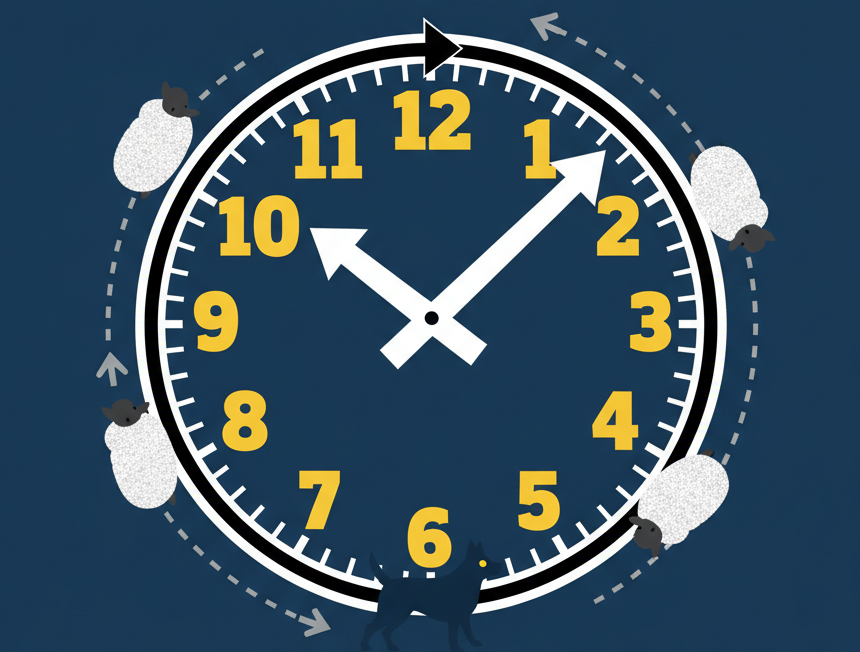
Why the Clock Works
I was a teacher for many years, and I have the ability to break things down. I'm also a very visual learner, so I see things in pictures. I think the majority of people are visual learners, and so I created this clock exercise. I didn't make it up – I've heard it from somewhere else, and I've built on it.
The clock makes sense to people and then they can understand what we're doing. We can teach flanking (the directions the dog goes around the stock), we can teach turning shoulders out and giving to pressure, we can teach small flanks for driving, we can teach cross driving, and we can work on balance work with this clock concept.
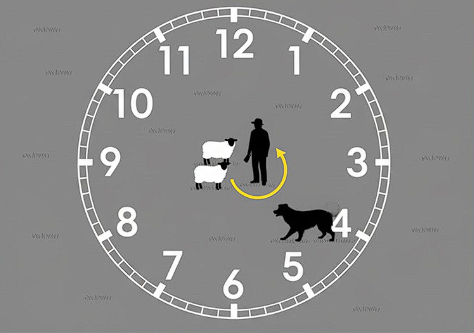
Setting Up the Clock
Imagine on the ground there is a clock, a very large clock. The size of the clock depends on what level you're working and where your dog and handler skills are. The clock can be huge – 100 to 200 feet wide – or it can be 60 feet wide or 20 feet wide.
You and the sheep are in the middle of the clock to start with, and the dog is on the outside edges where the numbers would be. The size depends on the flight zone of the sheep, the skill of the dog, and the handler.
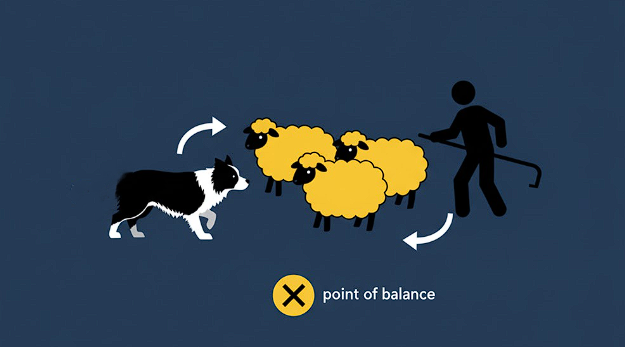
Basic Balance Work
You're going to teach your dog to stop on balance first. You may back up a little so they have a point of balance. If you stay in the middle of the sheep, the dog has nowhere to balance really because if the dog is not pressuring the sheep, you'll have to send your dog around to balance and stop the dog on balance.
Dogs tend to stop on balance easier than if they're not. So if you have a dog that's really fighting you on your stop, use balance to help them understand. After we get a little bit of that, I expect an immediate stop, and if not, the next command is down.
Moving to Advanced Work
Once you get your on-balance flanks and your dog will stop and is controlled on the stop, then you can move to off-balance flanks. An off-balance flank is when the dog stops or moves in a way that will take the sheep away from you or not directly to you.
If you want to move to a cross drive, if you're looking at the clock and the dog is at 12, and you're in the middle with the sheep, you can flank them around to three o'clock, stop them off balance, and then you would use the walk up and walk straight into the stock. That would be the start of a cross drive.
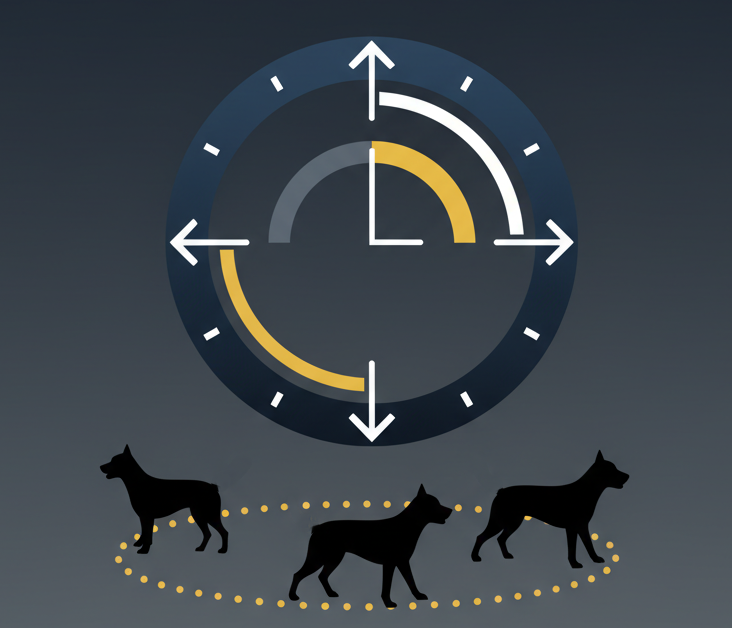
Why This Method Works
The clock is a moving concept – you're not going to be standing in one place. It's a visual circle for you to see where balance is and how to think about balance. It's really nothing new – a lot of people train dogs this way – but it gives people a visual idea of what we're looking for.
I actually had a student last week who was asking me how to pull a dog off balance for an off-balance cross drive. We set some things up and worked on it, and I was like, "Hey, you can do this on the clock." I showed this person how to do it on the clock and a light came on. We realized he already had that skill in that dog because we had been working on the clock so long.
Practical Applications
The clock can also help you control over-flanking by teaching your dog the "there" command on the circle, keeping the flanks very small and tight so they learn to control the stock and walk up into pressure.
I teach my dogs a lot of their walk up and walk into pressure on the clock. I teach it elsewhere as well and reinforce in other areas, so I don't depend 100% on this clock. But this clock is a very good and simple way of clarifying things for people and making it very simple.
Once they can see the concept on the clock, we can then transfer that to other things. And if we see something we need, we go back to the clock and realize, "Oh, we already have it, we just need to conceptualize it off the clock."
Getting Ready for Competition
The dogs that will excel in the 2026 Futurity will be the ones that understand these concepts thoroughly. The clock method gives both dog and handler a clear framework for understanding position, balance, and control. It's not just about following commands – it's about understanding the geometry of livestock control.
When you see a dog working with perfect understanding of where they need to be and why, you're seeing the result of this kind of systematic training. That's what we're looking for in our futurity dogs – not just obedience, but true understanding of the work.
Mark as Favourite
0
Share this post:


Related posts
Related posts
Copyright © 2026 Funky Town K9 Academy - All Rights Reserved.