

arrow_drop_down_circle
Divider Text

The Thinking Dog: Why Independence Matters in Working Dogs
August 21, 2025
By
Jacqueline Tinker
arrow_drop_down_circle
Divider Text
I want a thinking dog. I want a dog that can figure things out without me. They need to see a problem and then fix it. Sometimes my dogs work far out of sight and if something comes up I can't tell them what to do, they have to make decisions on their own
.
Let me tell you a story that perfectly illustrates what I mean by a "thinking dog."
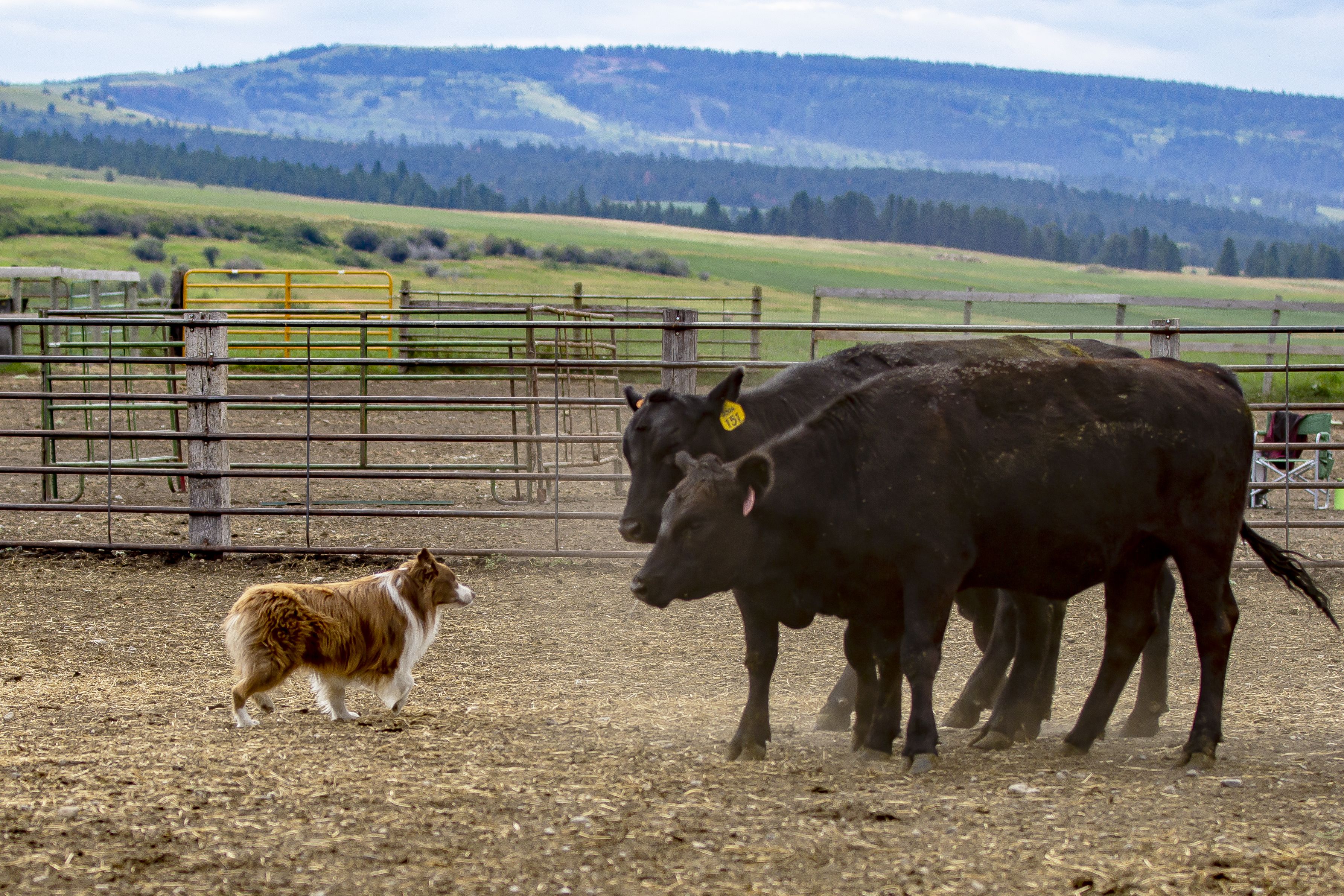
Copper's Problem-Solving Masterclass
When we first moved to our current place it was summer and the grass was tall, especially along the fences. The fences appeared at first glance to be sheep proof, but all that tall grass disguised some lamb-sized holes.
I looked out over the pasture and saw a ewe running around in total panic. We had just lambed and so I knew instantly what her issue was. She had lost her baby! I headed out with Copper to assess the situation.
I crested the hill just in time to see Copper bringing a whole mess of lambs through a hole in the fence back onto our side. He found the hole in the fence, located a bunch of wayward lambs, and then brought them back through the same hole he went through on his way out to rescue them.
This is a thinking dog. He figured out what the problem was, found the hole, and realized he had a mess of lambs to bring back and knew enough to get them back through the hole. Also, young lambs don't herd easily. I just stood on the hill and watched in amazement. He had never done this task before and at the young age of three years old figured it out.
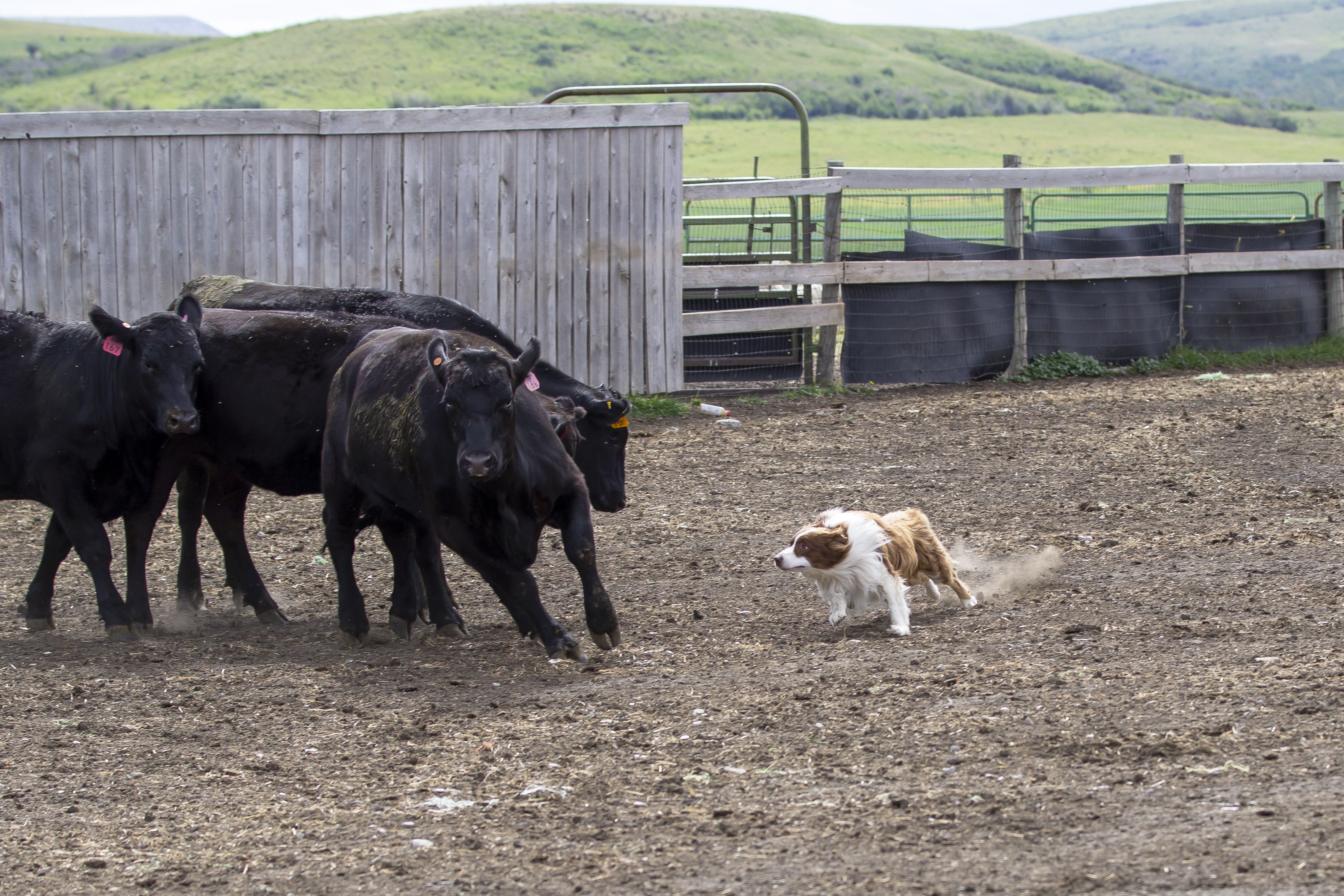
The Double-Edged Sword
The problem with a thinking dog is that he is a thinking dog. When developing a truly thinking dog, you have to let them make mistakes and figure out how to fix their mistakes. Then once you have allowed the dog to think on his own, he will start to override you from time to time.
I have a different philosophy on this than many other dog trainers. My thinking dog is my partner and I want a partner that has my back. Copper knows the job and if I give a wrong flank, I have no issue if he ignores that command and executes the job properly.
This has hurt me and helped me in the trial arena. There needs to be some balance. There still needs to be a leader and I don't allow him to blow me off or disregard me completely, but when I am wrong and he fixes it, then I don't correct him. In fact, I will apologize to him and thank him for having my back.
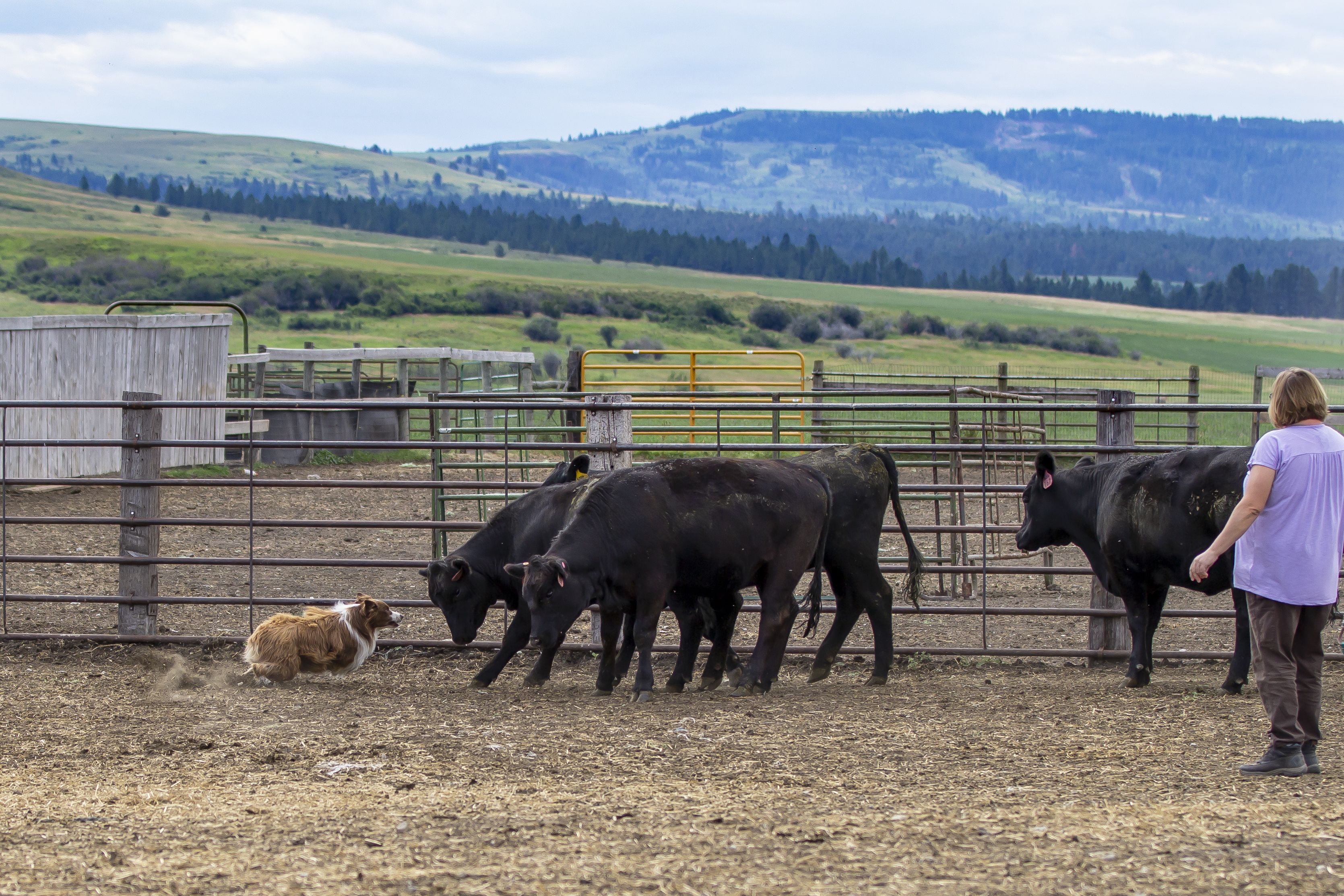
Training the Thinking Dog
To get a high level of training and to mold a dog's ability to control livestock, it is important to get that dog exposed to as many different experiences as possible. Take your dog to a trainer, take them to friends' places to work their stock, and go to clinics. Giving your dog lots of experiences will help develop them into a better thinking dog.
The ultimate demonstration of livestock control is when the dog can move the livestock anywhere you want them to be moved. If we need to gather from a pasture, the livestock should move in a straight line back to the handler, barring obstacles! If we are driving the livestock somewhere, they need to move in a calm controlled manner in the exact direction we need them to go.
Why It Matters
A thinking dog is invaluable on a working ranch or farm. They become true partners in the work, not just tools that follow commands. When you're moving cattle in rough country or gathering sheep in thick brush, you need a dog that can assess situations and make good decisions independently.
The 2026 Futurity will showcase these thinking dogs – the ones that don't just follow commands but truly understand their job. These are the dogs that will preserve the working heritage of our breed for future generations.
.
Let me tell you a story that perfectly illustrates what I mean by a "thinking dog."
Copper's Problem-Solving Masterclass
When we first moved to our current place it was summer and the grass was tall, especially along the fences. The fences appeared at first glance to be sheep proof, but all that tall grass disguised some lamb-sized holes.
I looked out over the pasture and saw a ewe running around in total panic. We had just lambed and so I knew instantly what her issue was. She had lost her baby! I headed out with Copper to assess the situation.
I crested the hill just in time to see Copper bringing a whole mess of lambs through a hole in the fence back onto our side. He found the hole in the fence, located a bunch of wayward lambs, and then brought them back through the same hole he went through on his way out to rescue them.
This is a thinking dog. He figured out what the problem was, found the hole, and realized he had a mess of lambs to bring back and knew enough to get them back through the hole. Also, young lambs don't herd easily. I just stood on the hill and watched in amazement. He had never done this task before and at the young age of three years old figured it out.
The Double-Edged Sword
The problem with a thinking dog is that he is a thinking dog. When developing a truly thinking dog, you have to let them make mistakes and figure out how to fix their mistakes. Then once you have allowed the dog to think on his own, he will start to override you from time to time.
I have a different philosophy on this than many other dog trainers. My thinking dog is my partner and I want a partner that has my back. Copper knows the job and if I give a wrong flank, I have no issue if he ignores that command and executes the job properly.
This has hurt me and helped me in the trial arena. There needs to be some balance. There still needs to be a leader and I don't allow him to blow me off or disregard me completely, but when I am wrong and he fixes it, then I don't correct him. In fact, I will apologize to him and thank him for having my back.
Training the Thinking Dog
To get a high level of training and to mold a dog's ability to control livestock, it is important to get that dog exposed to as many different experiences as possible. Take your dog to a trainer, take them to friends' places to work their stock, and go to clinics. Giving your dog lots of experiences will help develop them into a better thinking dog.
The ultimate demonstration of livestock control is when the dog can move the livestock anywhere you want them to be moved. If we need to gather from a pasture, the livestock should move in a straight line back to the handler, barring obstacles! If we are driving the livestock somewhere, they need to move in a calm controlled manner in the exact direction we need them to go.
Why It Matters
A thinking dog is invaluable on a working ranch or farm. They become true partners in the work, not just tools that follow commands. When you're moving cattle in rough country or gathering sheep in thick brush, you need a dog that can assess situations and make good decisions independently.
The 2026 Futurity will showcase these thinking dogs – the ones that don't just follow commands but truly understand their job. These are the dogs that will preserve the working heritage of our breed for future generations.
Mark as Favourite
0
Share this post:


Related posts
Related posts
Copyright © 2026 Funky Town K9 Academy - All Rights Reserved.